
Want more customers for your fencing business? Start with local SEO.
Here’s the deal: 97% of homeowners use Google to find local services, and 28% of searches lead to a sale within 24 hours. If your business isn’t showing up in local searches like “fence contractors near me,” you’re losing out.
Top 10 Local SEO Tactics for Fence Contractors:
- Optimize Your Google Business Profile (GBP): Claim and verify your profile, use “Fence Contractor” as your category, and upload project photos.
- Use Location-Based Keywords: Target phrases like “fence installation [City, State]” to connect with local customers.
- Build Local Business Citations: List your business consistently on directories like Yelp and Yellow Pages.
- Add Schema Markup: Use structured data to help search engines display your services and reviews better.
- Create Neighborhood-Specific Pages: Highlight your expertise in specific areas with tailored content.
- Encourage Customer Reviews: Ask for reviews after projects and respond to all feedback promptly.
- Partner Locally: Build backlinks and referrals through partnerships with landscapers, realtors, and pool contractors.
- Optimize for Mobile: Ensure your website is fast, easy to navigate, and mobile-friendly.
- Focus on Voice Search: Write conversational content that answers common questions like “What’s the best fence for privacy?”
- Track Performance: Use tools like Google Analytics and Search Console to monitor rankings and traffic.
Why it matters: Over 46% of all Google searches have local intent, and businesses with strong local SEO consistently attract more leads. Start with these tactics to boost visibility and grow your business.
Master Local SEO for Fencing Contractors in 2024 #fencing #seo #localseo #seotips
1. Optimize Your Google Business Profile for Local Areas
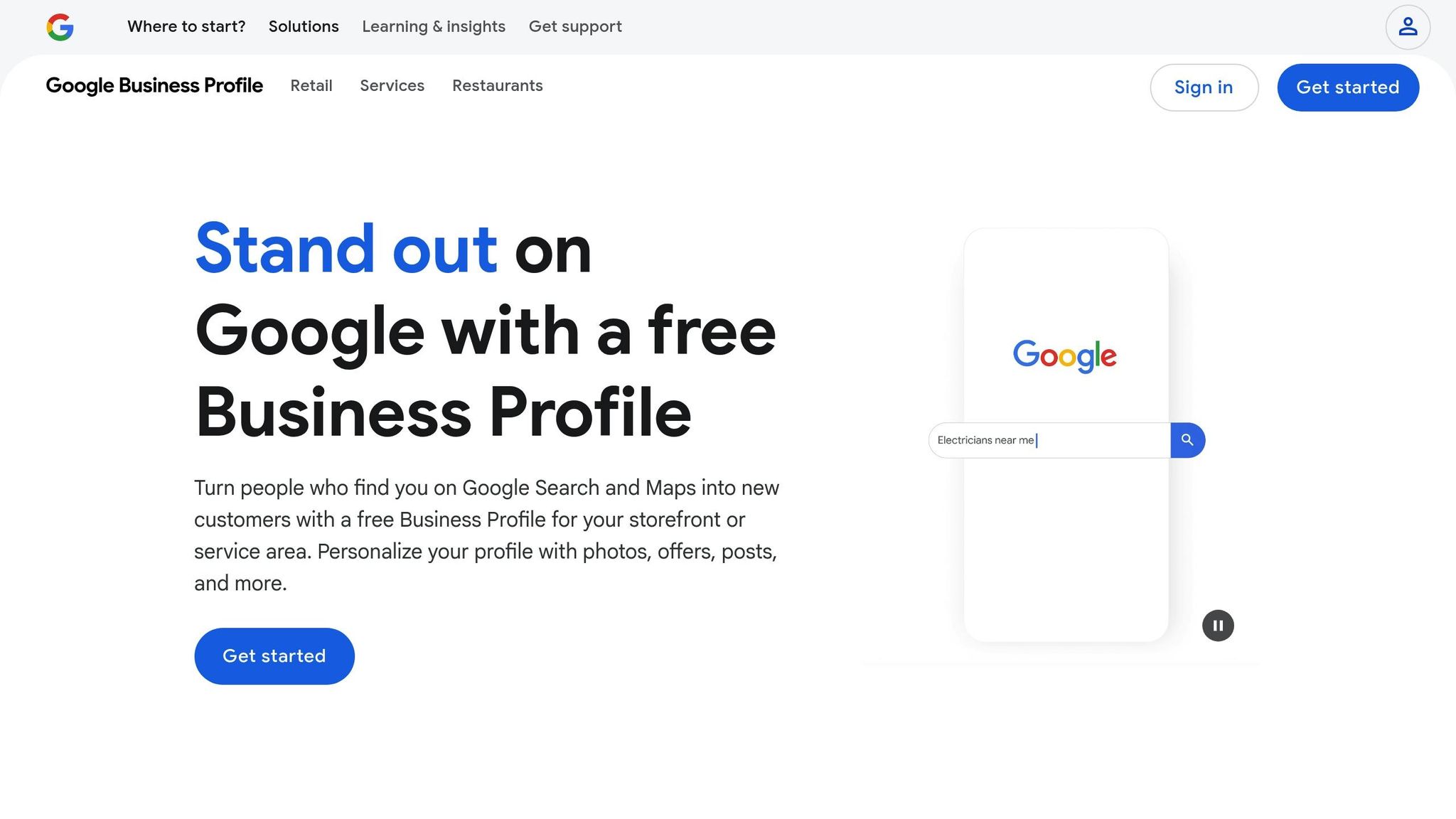
Your Google Business Profile (GBP) acts as your virtual storefront, often shaping the first impression potential customers have of your fencing business. When someone searches for "fence contractors near me", your GBP plays a critical role in determining whether you appear in the highly sought-after local pack – the top three results displayed alongside map pins. Getting your profile in top shape can help you secure one of these prime spots.
"Your GBP is as important as your website."
Start by claiming and verifying your GBP. Make sure your business name matches exactly across all platforms – your storefront, website, and business cards. Even small discrepancies can hurt your visibility.
"The business name must be your official business name… Your name should reflect your business’s real-world name, as used consistently on your storefront, website, stationery, and as known by customers."
Choose "Fence Contractor" as your primary category. If applicable, add secondary categories like "Fence Supply Store" to provide more detail about your services.
Set your service areas carefully. Specify that you serve customers at their locations and clearly outline your geographic range. Consistency is key: make sure your NAP (Name, Address, Phone) details are identical across all platforms to avoid confusing Google’s algorithms.
Photos can make a big difference in engagement levels. Upload high-quality images showcasing your work – wooden fences, vinyl options, aluminum designs, or chain-link installations. Visuals not only make your profile more appealing but also help potential customers envision what you can do for them.
Your profile description matters just as much as visuals. Write a customer-focused, keyword-rich summary that highlights your fencing expertise and the areas you serve. To keep your profile active and relevant, post updates weekly using Google Posts. This signals to Google that your business is well-managed and engaged.
Encourage happy customers to leave reviews on Google, and take the time to respond to each one – whether it’s glowing praise or constructive criticism. Prompt and professional responses show that you value feedback and care about your clients, which can improve your rankings and build trust.
Keep your profile up to date. If your business hours, contact details, or services change, update them promptly. An accurate profile not only helps with rankings but also builds confidence with potential customers who are ready to hire.
"A Google Business Profile (GBP) gives you a public identity on Google… It helps people find your business when they search for the services you offer. Your Google Business Profile can affect if and where you appear in local search results."
With 96% of people relying on online sources to learn about local businesses and independent contractors being searched for 1.7 million times each month, having an optimized GBP ensures you’re visible to high-intent customers at the exact moment they’re looking for a fence contractor. Following these steps lays the groundwork for your local SEO success.
2. Target Location-Based Keywords
Once your Google Business Profile is in top shape, it’s time to zero in on local search traffic by targeting location-based keywords. These keywords help you connect with local customers who are more likely to convert compared to general searchers.
Swap out broad terms like "fence installation" for precise phrases such as "fence contractors Jacksonville FL." Why? Because these location-specific keywords blend your core services with geographic identifiers – think cities, neighborhoods, ZIP codes, or even local landmarks – and typically face less competition than generic industry terms.
Start with your main services (e.g., "fence installation") and create localized variations like "fence installation Tampa" or "fence repair near Westchase." Use both explicit terms (e.g., "fence builders Charlotte NC") and implicit terms (e.g., "fence repair near me") that signal local intent. Then, structure your website so each service page targets a specific location.
For example, keyword data shows that searches like "fence company Jacksonville FL" (260 monthly searches) attract highly motivated local customers. These are the people actively looking to hire someone in your area. Tools like Google Keyword Planner, SEMrush, and Ahrefs can help you track search volume and competition for local terms. Organize your findings in a spreadsheet, focusing on terms with clear local intent.
Neighborhood-level targeting can be a game-changer for fence contractors. Instead of just going after "Denver fence company", try hyper-local phrases like "fence installation Highlands Ranch" or "privacy fence Cherry Creek." These niche terms often have less competition and can bring in customers from specific areas you want to prioritize.
Identify high-conversion keywords like "fence repair Orlando" or "fence estimate Tampa", and assign them to dedicated pages on your site. This approach avoids internal competition between pages and maximizes your chances of ranking well. With 97% of people searching online for local businesses and 33% of clicks going to the top three results, choosing the right keywords can make a huge difference in your lead generation efforts.
Nationwide, the fence industry sees over 1,131,400 monthly searches, with terms like "fence company near me" pulling in 165,000 searches and "fence contractors" reaching 135,000. By narrowing your focus to your specific service areas instead of competing nationally, you can tap into this local search traffic and build a steady stream of qualified leads.
3. Build Local Business Citations
Local business citations are like digital breadcrumbs that help search engines confirm your fence company’s location and legitimacy. These references to your business name, address, and phone number (NAP) act as trust signals, improving your local search rankings and driving more leads.
Here’s why they matter: Businesses listed on 10 or more sites can see up to an 80% visibility boost and a 67% increase in consumer actions, while those with 30+ citations often experience a 136% jump in engagement. Citations are a key ranking factor for local SEO – they’re the fifth most important for Local Pack visibility and the fourth for local organic search results. Companies that dominate the first page of local search results typically maintain around 80 citations across various platforms.
Once you’ve nailed down your keyword strategy, the next step is to build accurate citations. Start by focusing on three key types of directories:
- General national directories: Platforms like Google Business Profile, Yelp, and Yellow Pages offer broad exposure.
- Local directories: Listings on sites like your city’s chamber of commerce or regional business directories connect you with nearby customers.
- Industry-specific directories: Niche platforms like USFenceGuide.com, which has been curating fencing businesses since 2007, provide targeted visibility for your services.
When choosing directories, prioritize high-authority sites with domain scores of 60 or higher. These carry more weight with search engines and deliver better results. Use tools like Google Analytics to verify whether paid directories are driving traffic and conversions.
Consistency is key. Your business name, address, and phone number must appear exactly the same across all listings. Even small discrepancies – like "St." vs. "Street" or different phone formats – can confuse search engines and hurt your rankings. To avoid this, create a standard format for your NAP details and use it everywhere.
Regular maintenance of your citations is equally important. Inconsistent or outdated information can confuse potential customers and weaken your SEO performance. Schedule monthly audits to review your major listings, fix errors, and remove duplicates, as these can dilute your local search authority.
When creating citations, write concise yet informative business descriptions that highlight your fencing services and the areas you serve. Choose categories and keywords that reflect what your target audience searches for, and keep an eye on your competitors’ listings to identify additional directories or opportunities you may have missed.
4. Add Schema Markup for Fence Projects
Once you’ve tackled local citations, it’s time to take things up a notch with schema markup. This advanced on-page element helps search engines get a clearer picture of your fence company’s services, location, and project details. Essentially, schema markup is a standardized way to tag key business details – like your name, address, phone number, customer reviews, and fencing services – so search engines can present them more effectively. While it’s not a direct ranking factor, schema can improve your visibility, attract more clicks, and even boost conversions by enabling rich search results.
Rich results are those eye-catching extras in search listings, like star ratings or project photos, that often lead to higher click-through rates. For fence contractors, this could mean showcasing your service areas or glowing customer reviews right in the search results.
Setting up schema markup might sound intimidating, but it’s easier than you think. Google favors the JSON-LD format for schema, and tools like the Microdata Generator or Schema App JSON-LD Generator can help you create the necessary code quickly.
For your fence business, start with the LocalBusiness schema as your base. Since Schema.org doesn’t have a specific category for "fence contractor", the general LocalBusiness schema works perfectly. Include essential details like your business name, website URL, operating hours, phone number, address, and a short description of your services. To add more depth, consider including optional properties like customer reviews, aggregate ratings, FAQ pages, links to social media profiles, Google Maps integration, or even details about specific service departments. Just like with your GBP and local citations, accuracy here is key – it reinforces your business’s credibility.
Before going live, validate your schema markup using tools like Google’s Rich Results Test and Schema Markup Validator to ensure everything is accurate. Once implemented, keep an eye on its performance through Google Search Console. This will help you confirm that your markup remains valid and track its impact on your site’s visibility. Proper schema setup ensures your fence projects gain maximum exposure, building on the momentum of your earlier strategies.
Schema markup also plays a big role in AI-driven search tools. With the growing use of voice assistants and chatbots, having well-structured data ensures that your business details appear correctly when potential customers search for local fencing services.
5. Create Service Pages for Each Neighborhood
Once you’ve set up your schema markup, it’s time to expand your local SEO efforts by creating dedicated web pages for each neighborhood your fence company serves. These Service Area Pages (SAPs) are designed to target specific locations, turning local searches into real leads.
Here’s how you can ensure these pages resonate with each community.
Make Each Page Unique
Each neighborhood has its own character – your service pages should reflect that. For example, a "Fence Installation in Westfield" page could highlight the area’s historic homes and any specific HOA guidelines. On the other hand, a "Fence Installation in Downtown" page might focus on solutions for urban privacy or fencing for commercial properties.
Tailor the service descriptions to the area’s needs. Wealthier neighborhoods may prefer high-end materials and decorative designs, while industrial zones might require heavy-duty security fencing. Mentioning local landmarks like parks, schools, or popular businesses can make the page feel more connected to the community.
Including neighborhood-specific testimonials and photos of your projects is another great way to add a local touch. Showcase your work with recognizable backdrops, and emphasize your expertise with stats or success stories. For instance, The Media Captain’s collaboration with J&D Landscaping in February 2025 is a great example. They created service pages for Chagrin Falls, an affluent suburb, by interviewing the owner, using client case studies, and featuring exclusive project photos. This approach made the pages feel authentic and highly effective.
Strengthen Local Ties
After crafting unique pages, take it a step further by highlighting your local connections. For example, mention partnerships with area businesses like lumber yards or contractors. Not only does this boost your credibility, but it can also open the door to referrals.
Content That Speaks to the Community
Gather insights from your clients to create content that addresses local challenges and preferences. Ask about specific neighborhood factors or requirements that influenced their fencing choices. These details can shape authentic, location-focused stories that both search engines and potential customers appreciate.
Be upfront about your business location and the areas you serve. Clearly listing your service areas builds trust and improves your local search rankings.
Consider this: 76% of people who perform a local search on their smartphone visit a business within a day. By crafting neighborhood-specific pages with engaging, locally relevant content, you can capture this immediate intent and turn it into action.
When done right, these service area pages can connect you with local communities, boost your search visibility, and showcase your expertise. The key is to invest the time to make each page genuinely meaningful to the residents of that neighborhood.
6. Set Up a Customer Review System
A well-organized review system is a game-changer for boosting your local search visibility. Did you know that 98% of consumers check online reviews for local businesses, and 76% of customers who are asked to leave a review actually do it? By encouraging reviews, you not only build trust but also improve your search rankings, making it a key part of your local SEO strategy.
Time Your Review Requests Perfectly
The best time to ask for a review? Right after the installation is complete and the customer has had a chance to admire their new fence. Making an in-person request before packing up your tools feels natural and increases the chances of them leaving a review.
Create Multiple Touchpoints
Don’t stop at just one request. Follow up with a brief call within 24–48 hours to check in, and send a personalized text message with a direct link to your Google Business Profile or another preferred review platform. For example, Glass Factory, a home improvement company, launched its first customer survey and achieved a 20% response rate. This effort brought in 20 Google reviews and valuable customer feedback.
Focus on the Right Platforms
Your Google Business Profile should be your top priority. Nearly half of local Google searches impact rankings, so having active reviews on this platform is essential. Keep your profile updated and active for better visibility. Additionally, consider platforms like HomeAdvisor and Facebook if they align with where your target customers spend their time.
Handle Negative Reviews Professionally
Negative reviews are bound to happen, but they don’t have to hurt your reputation. In fact, 89% of consumers read responses to negative reviews, and 45% are more likely to visit a business that addresses issues promptly. Aim to respond within 24–48 hours to show you care about customer satisfaction. When replying, acknowledge the issue, apologize for any inconvenience, and invite the customer to reach out directly so you can address their concerns.
"You must always respond to ALL reviews – good, but especially bad ones. And promptly. Never argue. Always be reasonable. If someone in your company has made a mistake, acknowledge the problem to validate the customer’s concern and apologize. Then offer a solution that’s fair to both you and the homeowner."
- Dmitry Lipinskiy, Social Media Influencer in the Roofing Industry
Here’s a real-world example: Boots, a well-known pharmacy chain, saw a 186% increase in purchase intent after responding to negative reviews with helpful explanations and solutions.
Make the Process Simple
Make it as easy as possible for customers to leave a review. Add direct links to your preferred review platforms on business cards, invoices, and project completion forms. A simple note like, "Love your new fence? We’d appreciate a quick review!" can go a long way in encouraging feedback.
sbb-itb-15d3ab6
7. Build Links Through Local Property Partnerships
Partnering with local property businesses is a smart way to earn high-quality backlinks and improve your local search rankings. By forming these connections, you not only increase your online visibility but also create opportunities for mutual growth.
Identify Your Ideal Partners
Start by pinpointing businesses that complement your services. For example:
- Landscapers: They often work on properties before or after fence installations, making them natural collaborators.
- Pool builders: Privacy fencing is a common need for pool projects.
- Property management companies: They frequently require fence repairs or replacements for rental properties.
- Real estate agents: They can refer clients looking to enhance property value with new fencing.
- Home improvement stores: These businesses attract the same DIY enthusiasts you want to connect with.
These partnerships not only generate referrals but also provide valuable backlinks that strengthen your local SEO.
Create Cross-Promotion Opportunities
Once you’ve identified potential partners, look for ways to promote each other’s services. Here are a few ideas:
- Display each other’s promotional materials in your stores or offices.
- Include flyers or coupons in customer orders.
- Share posts about each other’s services on social media.
This kind of collaboration helps both businesses tap into broader customer bases while naturally creating opportunities for backlinks and mentions.
"Partnering with other businesses does not need to be complicated. Simply providing each other the opportunity to collaborate, share, and grow is enough to make for a successful event." – Schuyler Bull, Owner of Fort Orange General Store
Develop Content Collaboration Strategies
Collaborating on content is another effective way to secure backlinks. For instance:
- Write guest posts for partner blogs, like tips on fence maintenance for a landscaping company’s website.
- Create guides for real estate websites about how fencing can boost property security.
- Share project spotlights that showcase joint efforts, such as a backyard makeover featuring your fencing and a partner’s landscaping.
Local news sites, home design blogs, and neighborhood websites are often open to expert contributions. Offer to write seasonal fencing tips, maintenance advice, or security guides that link back to your website.
Establish Referral Programs and Community Initiatives
Formal referral programs can strengthen partnerships while driving traffic and backlinks. Work with your partners to create programs where you recommend each other’s services and offer incentives for successful referrals. Be sure to document these collaborations on your websites with mutual links to enhance your SEO.
Sponsoring local events is another way to build your online presence. Your business name and website can be featured on event pages or community calendars. Additionally, consider partnering with schools, charities, or non-profits by offering services or sponsorships. Engaging in trade organizations related to home improvement can also open doors for collaboration and backlinks.
Personalize Your Outreach
When reaching out to potential partners, avoid generic messages. Craft personalized emails that introduce your business and explain how a partnership could benefit their audience. Engage with local influencers, bloggers, or journalists who write about home improvement. Interact with their content by commenting on posts or sharing their work on social media.
These efforts not only build quality backlinks but also improve your local rankings. By combining these partnership strategies with earlier efforts like citations and schema, you’ll solidify your authority in local search results.
8. Optimize Your Portfolio for Mobile Users
Once you’ve strengthened your site’s local visibility, it’s time to make sure your portfolio performs flawlessly on mobile devices. With over 70% of web traffic coming from mobile users, a clunky or slow portfolio can mean losing potential leads.
Choose the Right Image Formats and Compress Wisely
Picking the right image format is key. Use JPEG for detailed photos, PNG for transparent graphics, and WebP for better compression without sacrificing quality. Images often make up 42% of a webpage’s weight, so optimizing them is essential.
Compression tools like TinyPNG, JPEGmini, and ImageOptim can shrink file sizes while keeping your images sharp and professional. For most mobile screens, a resolution of 72 PPI works well, but for devices with high-resolution displays, 144 PPI might be a better choice.
Use Smarter Loading Techniques
To speed up your portfolio, implement lazy loading using the loading="lazy" attribute or JavaScript libraries. This ensures images load only when users scroll to them, saving bandwidth and improving initial page load times.
Resize images to fit the display dimensions, and strip out unnecessary metadata from image files to reduce their size even further.
Design for Touchscreens and Smaller Displays
A responsive design is non-negotiable. Make sure text descriptions of your projects are easy to read without zooming, and ensure buttons and navigation elements are at least 44 pixels in size for effortless touch interaction.
Keep project descriptions short and to the point. Mobile users appreciate concise details like materials used, timelines, and standout features – just enough to grab attention without overwhelming the screen.
Test Across Devices and Networks
Regular testing is crucial to ensure your portfolio looks and performs well on various devices and network conditions. Use tools like Google’s Mobile-Friendly Test for quick feedback or platforms like BrowserStack and LambdaTest to preview your portfolio across different devices and browsers.
Check loading speeds on different network types. A delay of just one second can result in 7% fewer sales, 11% fewer page views, and a 16% dip in customer satisfaction.
Finally, consider using a Content Delivery Network (CDN) to store and serve your portfolio images from servers closer to your users. This can significantly enhance load times and improve the overall mobile experience. A smooth, fast portfolio can turn local searches into real inquiries.
9. Optimize Content for Voice Search Questions
After focusing on mobile optimization, the next step is tailoring your content for voice search. This adjustment is crucial for attracting local leads.
Voice search has reshaped how potential customers discover fence contractors. With over 50% of all searches now voice-based and 58% of users using voice search to find local businesses, it’s essential to align your content with how people speak, not just how they type. The trend is undeniable – voice search usage has surged by 146% between 2019 and 2023, and 71% of users now prefer speaking their queries over typing them. Additionally, 46% of voice search users search for a local business daily.
Adopt a Conversational Tone
Voice searches tend to be longer and more conversational. Instead of short phrases like "fence contractor Dallas", users often ask questions such as "Who’s the best fence contractor near me?" or "How much does a privacy fence cost in my area?" On average, voice searches are 29 words long, so it’s important to focus on long-tail keywords that mimic natural speech. Rather than targeting generic terms like "fence installation", create content around specific questions like "How long does it take to install a wooden fence?" or "What’s the best type of fence for privacy in windy areas?"
Answer Questions Directly and Quickly
Voice assistants typically pull answers from the top result, making it vital to secure position zero (the featured snippet). To achieve this, provide clear and concise answers within the first 40–60 words. For instance, if someone asks, "How much does fence installation cost?" start your response with a straightforward answer. Structure your content with questions as H2 or H3 headings, like "What permits do I need for fence installation in [City]?" or "How deep should fence posts be buried?" This makes your content more accessible for voice search.
Target Local Voice Search Patterns
Local intent drives a significant portion of voice searches for fence contractors. More than 55% of users rely on voice search to find local businesses, and 76% use voice search at least weekly. To capture this audience, include geo-modifiers in your content. Instead of generic phrases, craft location-specific answers like "Best fence materials for [City] weather conditions" or "Fence height restrictions in [County]." Highlighting your service areas in responses to common questions strengthens your local relevance and builds on earlier local SEO efforts.
Use Tools to Find Voice Search Keywords
Traditional keyword research doesn’t always account for the conversational tone of voice searches. Tools like AnswerThePublic and AlsoAsked can help uncover the specific questions your customers are asking. Pay close attention to question-based keywords, especially those starting with "where", as these often indicate strong local intent. Incorporate these conversational phrases into your content to better align with voice search behavior, complementing your broader local SEO strategy.
Structure Content for Voice Search Success
Organized, scannable content is essential for voice search optimization. Use bullet points, numbered lists, and short paragraphs (1–2 sentences) to make your content easier for voice assistants to process. Write in a conversational tone, as if explaining fence options to a neighbor. FAQ sections are particularly effective for voice search – create detailed FAQ pages with concise answers to common questions, while offering the option for more in-depth information.
By 2025, voice search sales are expected to hit $40 billion. Fence contractors who adapt their content for voice search now will position themselves to capture this growing market effectively.
10. Track Your Local Search Performance
Once you’ve optimized your profiles, keywords, and mobile experience, the next step is to measure how well your efforts are paying off. Tracking your performance is essential to understand what’s working and where adjustments are needed to strengthen your local presence.
To start, make use of Google Analytics and Google Search Console – two free tools that are indispensable for monitoring local SEO. Google Search Console provides insights into how search engines view and rank your website, while Google Analytics helps you understand how users find and engage with your site. Set these tools up right away – they’re the backbone of your tracking system. Once in place, focus on monitoring key metrics that can guide your strategy.
Essential Metrics to Monitor
Local search rankings indicate how well you’re targeting specific areas. Tools like Semrush’s Map Rank Tracker can help you keep tabs on your rankings for terms like "fence installation [your city]" or "privacy fence contractor near [neighborhood]". Check these rankings monthly to spot patterns and trends.
Your Google Business Profile (GBP) performance offers valuable insights into customer behavior. Look at the search queries bringing users to your profile, as well as total views and actions like phone calls, website visits, and direction requests. Tools like Semrush Local‘s Insights go beyond the basic data provided by Google’s dashboard, consolidating everything into one easy-to-read view.
Keep an eye on website traffic from local searches to identify which strategies are driving visitors. In Google Analytics, monitor organic traffic from location-specific queries and track conversion rates from this traffic. Pay close attention to mobile traffic – it’s critical. In 2023, mobile phones accounted for 58.67% of all web traffic globally, making mobile optimization a cornerstone of local SEO success.
Track Customer Actions and Conversions
Phone calls are a major driver of conversions. In fact, 60% of smartphone users contact businesses directly through search results using click-to-call features. Implement call tracking tools to figure out which SEO tactics are generating the most phone inquiries. Also, set up goals in Google Analytics to track key actions like form submissions, quote requests, or other meaningful interactions.
Don’t forget to monitor your review performance as part of your overall tracking efforts. This ties back to the review system you set up earlier in your strategy.
Analyze Competitor Performance
Keeping tabs on your competitors can uncover opportunities you might have missed. Look into their SEO strategies, customer reviews, and keyword rankings. Tools like Ahrefs allow you to track backlinks, domain authority, and referring domains for both your website and your competitors. This data can provide a clearer picture of where you stand.
Use Data to Improve Your Strategy
Review your Google Analytics reports on a monthly basis, focusing on long-term trends rather than short-term fluctuations. Use the Acquisition Reports to identify your most valuable traffic sources and the Behavior Flow reports to spot where users are dropping off.
Check your page load times using Google’s PageSpeed Insights. Also, monitor your local citations to ensure that your business information is consistent everywhere it appears. Tools like the LocaliQ Free Business Listings Grader can help you audit your listings and fix any discrepancies.
Conclusion
Local SEO is a game-changer for fence contractors navigating today’s digital-first world. With 98% of customers using the internet to find local businesses and nearly 46% of all Google searches focusing on local intent, your online visibility is directly tied to your success.
The numbers don’t lie. 76% of people who search for a nearby business on their smartphone visit that business within 24 hours, and 92% of searchers choose a business from the first page of results. If your business isn’t showing up in these searches, you’re leaving money on the table and losing out on customers ready to buy. These stats highlight the importance of a strong local SEO strategy.
Local SEO isn’t just about quick wins – it’s about building lasting growth. As Strato Doumanis puts it:
"A good SEO strategy pays off in the long run, bringing in customers consistently without having to rely solely on ads."
Start with the basics: optimize your Google Business Profile and encourage reviews. These simple steps can yield immediate results and build trust with potential customers. Once you’ve nailed the fundamentals, expand your efforts to include location-specific keywords, neighborhood-focused content, and partnerships with nearby businesses to further boost your reach.
Stephen Duetzmann, SEO and Content Strategist at SideQuestSolutions, offers this advice:
"SEO is a long game that benefits from small, deliberate action over periods of time. Be consistent, but don’t panic."
The search landscape is evolving fast. For instance, mobile searches for "store open near me" skyrocketed by over 250% between 2020 and 2022, and searches combining "where to buy" with "near me" grew by more than 200% during the same period.
Consistency is more important than perfection. Regularly updating your business profiles, gathering reviews, and creating fresh content will steadily improve your local search rankings. Plus, customers are 2.7 times more likely to trust a business with a complete Google Business Profile. Keeping your information accurate and consistent across platforms is essential.
Your fence contracting business has the opportunity to take the lead in your local market. By committing to these proven strategies, you can attract local customers and outpace your competition. The time to start is now.
FAQs
What’s the best way for fence contractors to track the success of their local SEO efforts?
Fence contractors can gauge the success of their local SEO efforts by tracking key metrics such as Google Business Profile activity (including views, clicks, and calls), local keyword rankings, and website traffic from local searches. Another essential factor to monitor is conversion rates – how many website visitors are turning into actual leads or customers.
To collect and analyze this data effectively, tools like Google Analytics and Google Search Console are incredibly useful. These platforms offer insights into where your traffic is coming from, how users interact with your site, and how your pages perform in search results. Regularly reviewing these metrics can help you identify what’s working well and make informed adjustments to fine-tune your strategy for better results.
What are the most common mistakes fence contractors make when setting up their Google Business Profile?
Common Mistakes Fence Contractors Make with Their Google Business Profile
Fence contractors sometimes stumble when setting up and managing their Google Business Profile, which can hurt both their local visibility and credibility. Here are some frequent missteps:
- Failing to claim or verify the profile: Claiming and verifying your profile is the first step to ensuring your business shows up in local search results. Without this, you’re missing out on a key opportunity.
- Leaving information incomplete or outdated: Missing or incorrect details – like your business hours, contact info, or the services you offer – can confuse potential customers and make your business seem unreliable.
- Skipping high-quality photos and updates: Clear, professional photos of your work and regular updates to your profile can make your business stand out in a crowded market.
- Overlooking customer reviews: Not asking for reviews or ignoring the ones you get can hurt your reputation. Engaging with reviews, whether they’re positive or negative, shows you care about your customers and helps improve your search rankings.
By keeping your profile accurate, visually appealing, and interactive, you can make a big impact on your local SEO and attract more customers.
How can fence contractors partner with local businesses to boost their local SEO rankings?
Fence contractors looking to boost their local SEO can benefit greatly by teaming up with nearby businesses that align with their services. Think landscaping companies, hardware stores, or home improvement providers. These partnerships open doors to cross-promotion, resource sharing, and a stronger presence in the local community.
Take, for instance, a collaboration with a landscaping company. You could co-host local events, create bundled service packages, or exchange referrals. Efforts like these not only establish trust with potential clients but also help you earn high-quality local backlinks – a key factor in climbing search rankings.
Another smart move? Getting involved with community events, whether through sponsorships or active participation. It’s a great way to make your business more visible and credible, both to local customers and search engines.